- Application
- Irrigation
- Country
- Türkiye
- Project type
- New construction
- Design flow
- 105 l/s
- Model
- 3 x ADENCO-45-1
- Number of screens
- 3
- Material
- 304 stainless steel, with protection bars
- Commissioned
- 2017
- Client
- BUSKI (Bursa Water and Sewerage Administration)
Overview
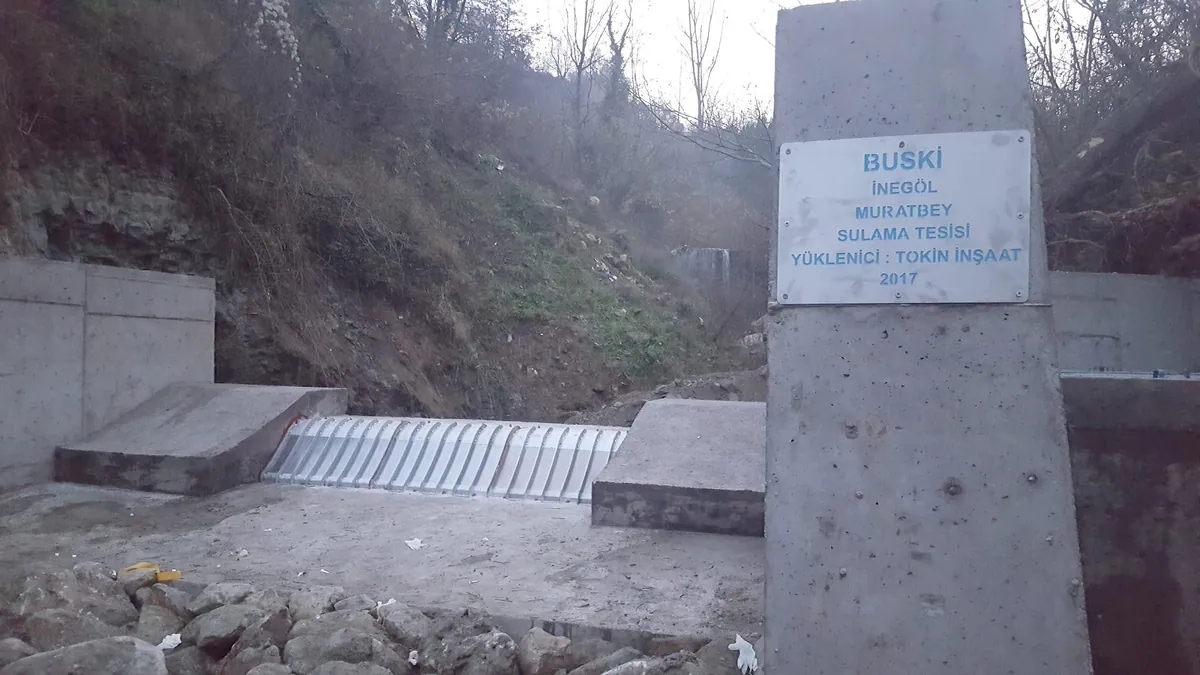
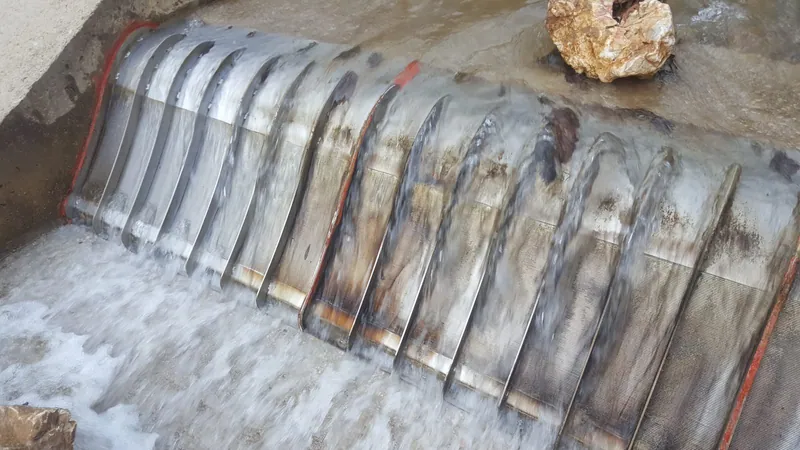
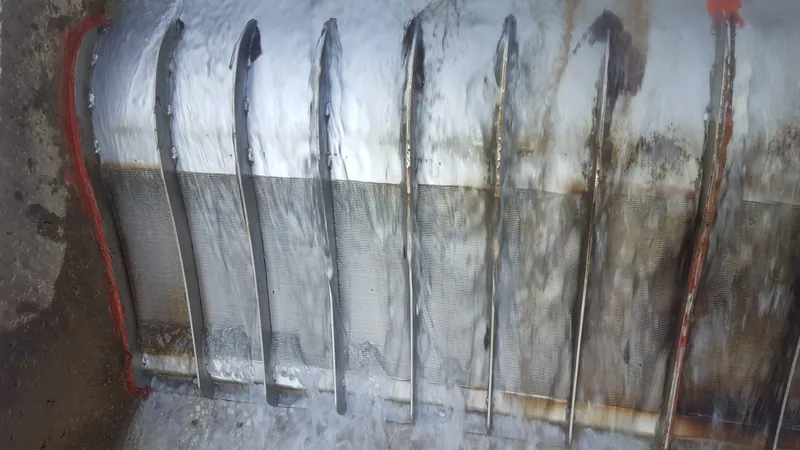
BUSKI, the water and sewerage administration of Bursa Metropolitan Municipality, had a series of small river intakes built for village irrigation systems across the province in 2017. The Muratbey irrigation facility near İnegöl is one of them: a 105 l/s diversion on a forest stream, built by the contractor TOKİN İnşaat, with three ADENCO-45-1 screens mounted side by side in a concrete weir. Because the river carries rock and timber when in flood, the screens were fitted with protection bars: stainless steel bars mounted in front of the wedge wire, extending down the screen face, which take the impact of whatever the river carries against the weir.
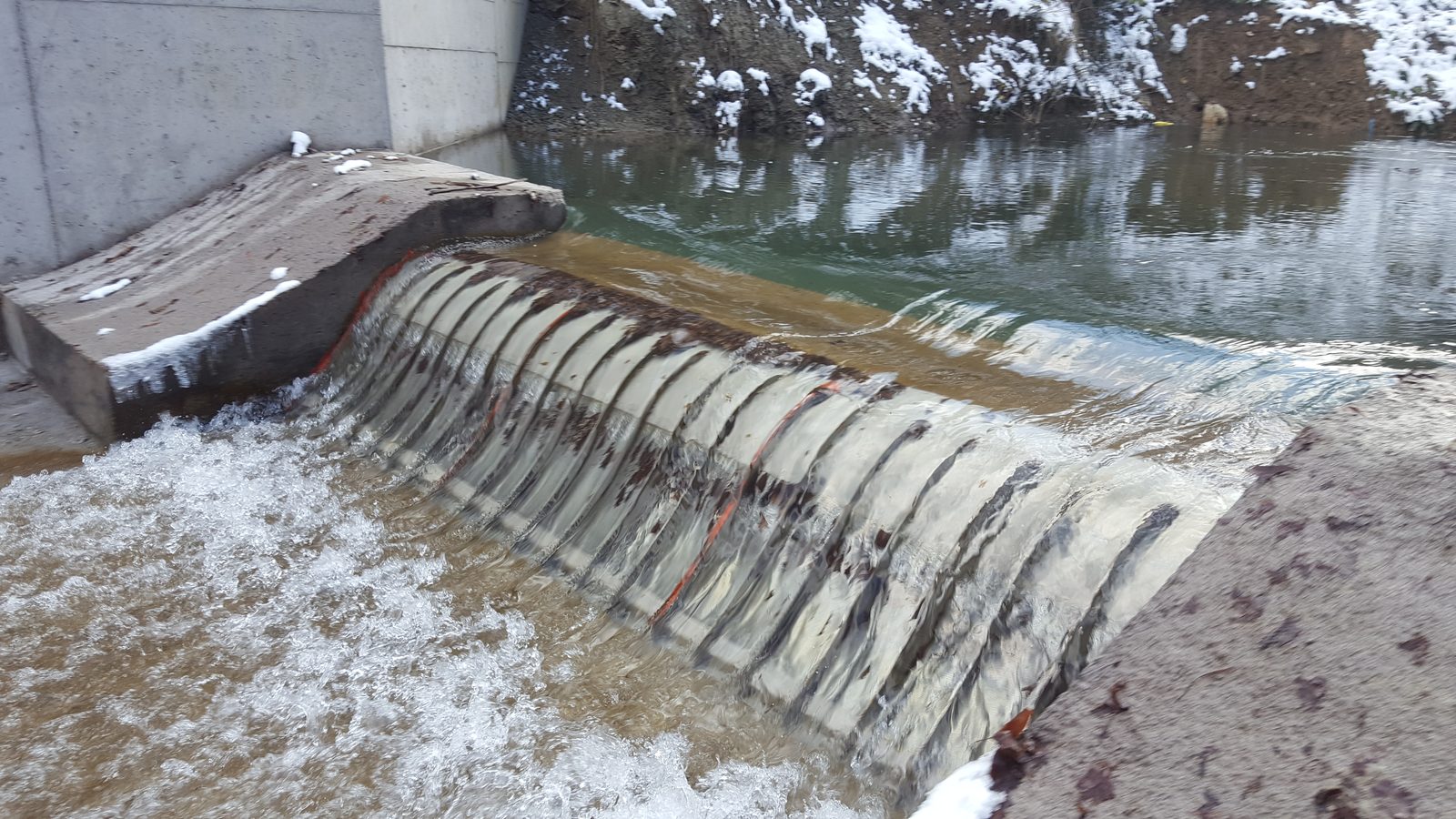
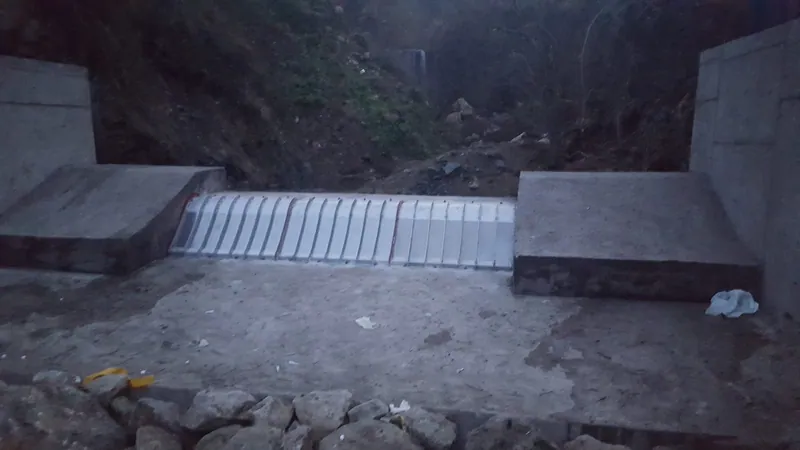
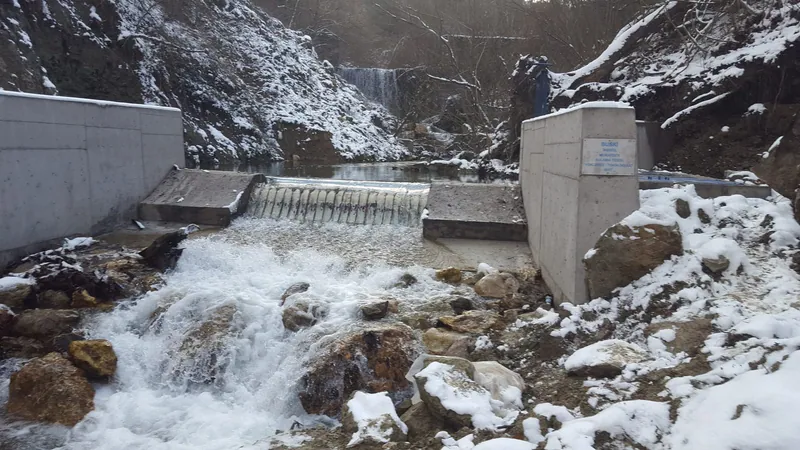
ADENCO photographed the intake at commissioning in late November 2017, with the pond behind the weir still empty, and again in late January 2018, two months after commissioning, operating under snow. At the end of August 2018, after heavy rain had put the river into flood, ADENCO went back to inspect it. That inspection is the subject of the video on the Technology page and of this page.
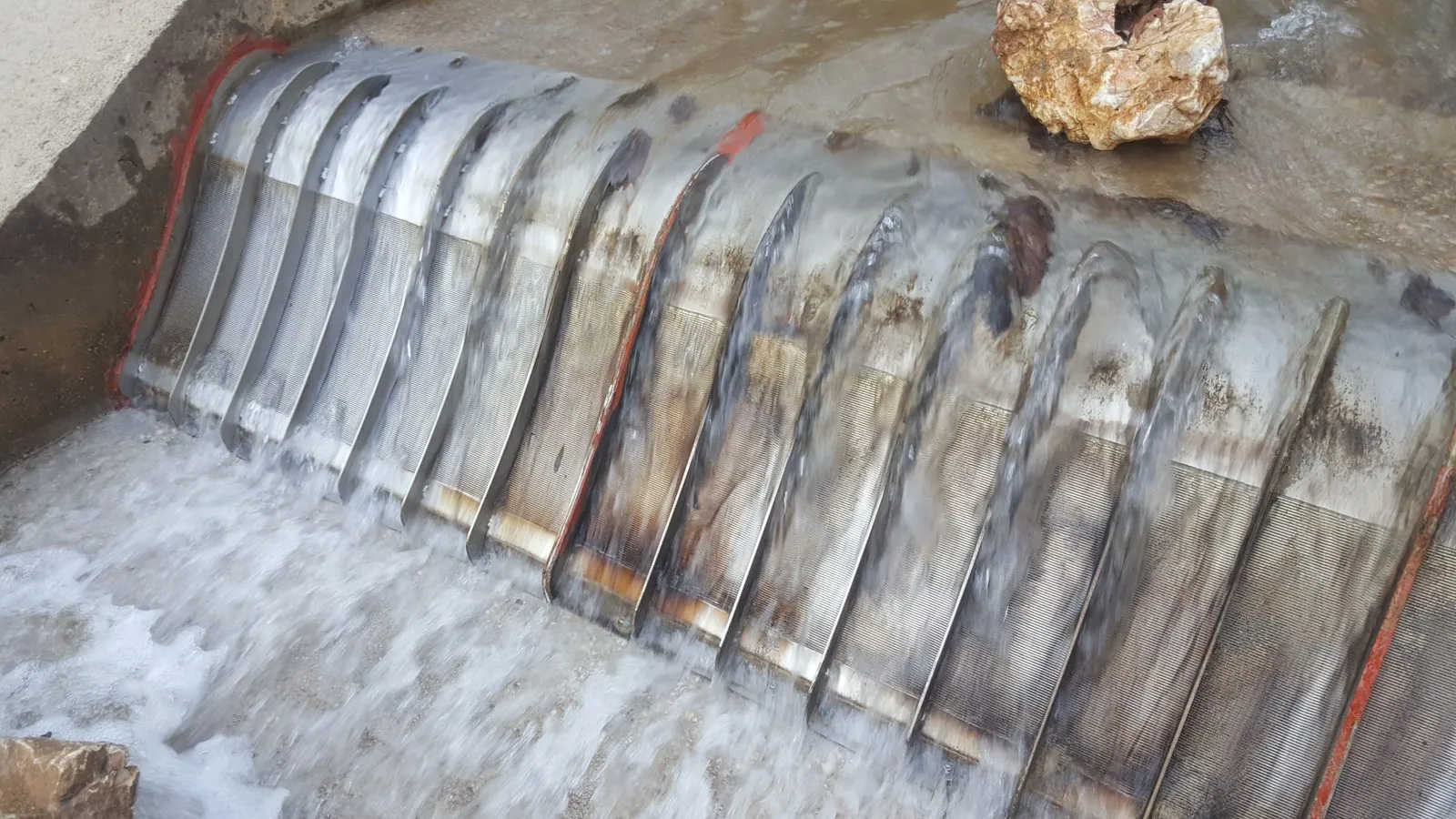
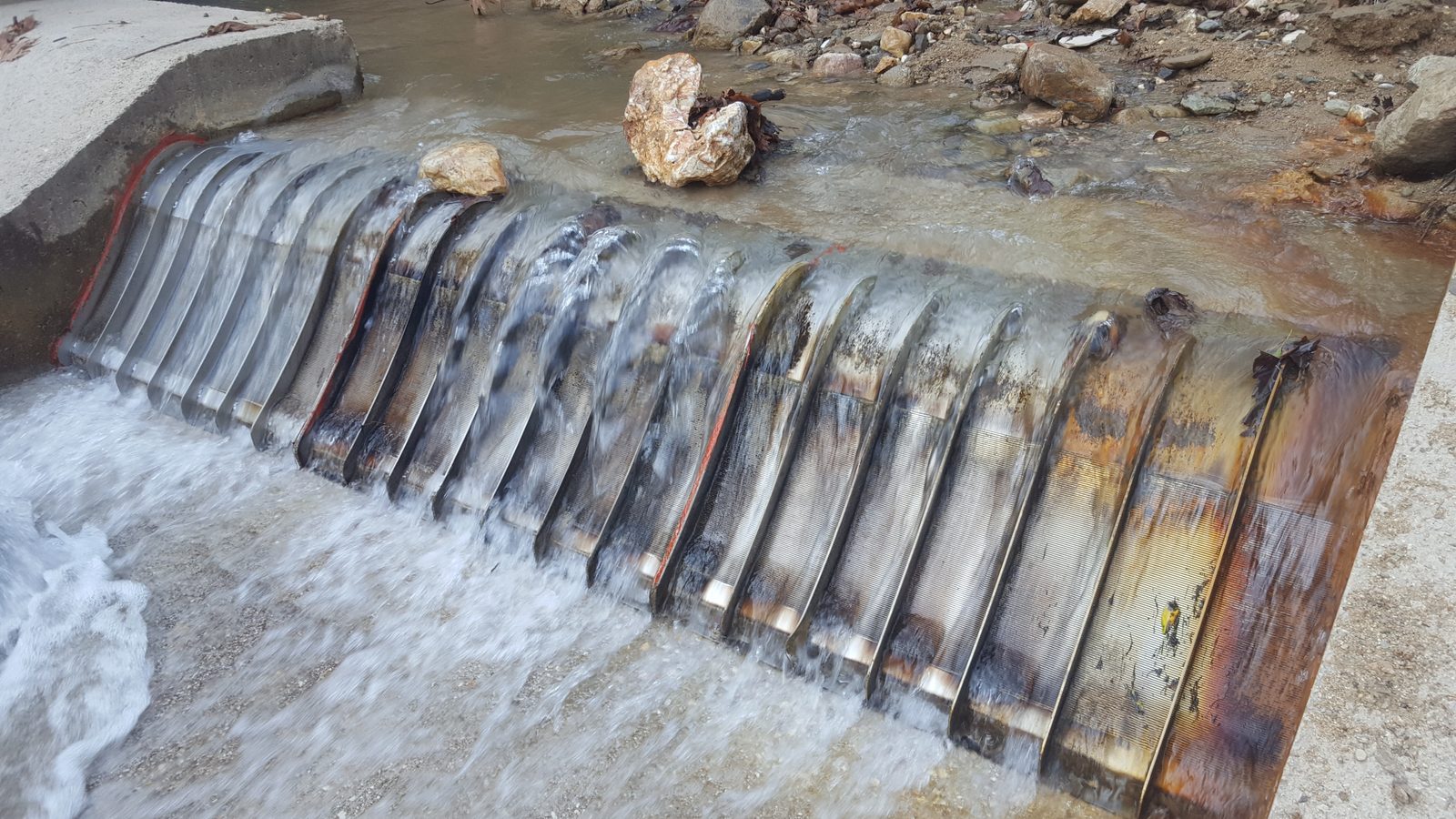
The pond behind the weir, empty at commissioning, had been filled to the weir crest with rock, gravel, sand and soil. Boulders had rolled over the screen face, and several were still lying on the weir crest when the photographs were taken. The protection bars took the impact: the wedge wire panels beneath them were undamaged, the screen was passing water through the slots, and water was flowing in the supply pipe downstream. Nobody had cleaned or repaired the intake between the flood and the inspection.
A Coanda screen does not depend on the pond behind the weir. The water enters the screen as a thin sheet over the weir crest and the screening happens on the screen surface, so a pond full of sediment does not stop the intake. The water utility normally clears the pond of sediment after a flood, and that is good practice, but the Muratbey inspection shows the intake supplying water until the pond is cleared. A conventional bar screen with a silted intake chamber behind it would have stopped.
The inspection also recorded a brown-to-black deposit on the protection bars and, more lightly, on the wedge wire, visible in the photographs below. ADENCO sent the photographs to its stainless steel supplier for review; the assessment was a surface deposit left by material carried in the river, not corrosion of the 304 stainless steel, and removable by cleaning. A deposit of this colour is characteristic of the iron and manganese that forest stream water carries in solution and deposits on any surface it flows over (the river bed at the site has the same colour), and the iron- and manganese-oxidising bacteria in river biofilms concentrate both metals onto submerged surfaces. The deposit was removed with a phosphoric acid wash, the standard treatment for such deposits: phosphoric acid dissolves iron oxides without attacking the chromium oxide layer that gives stainless steel its corrosion resistance.
The gallery is in date order: commissioning in November 2017, the first winter in January 2018, the site sign, and two photographs from the inspection after the flood in August 2018.
Results
Gallery
Delivered with ISO 9001 documentation, EN 10204 3.1 material certificates, and factory and site acceptance test (FAT/SAT) procedures.