- Application
- Hydropower
- Country
- Rwanda
- Project type
- New construction
- Design flow
- 850 l/s (screen capacity)
- Model
- Custom design
- Material
- 304 stainless steel
- Lead time
- 5 weeks (custom production batch)
- Commissioned
- 2019
- Client
- LED Energy (Kigasa Hydropower Plant)
Overview
The Kigasa hydropower plant, a women-owned facility in Musanze District, Northern Province, takes its water from a mountain stream that carries mud, leaves, branches and debris down from upstream communities. Without a self-cleaning intake, that debris reaches the turbines and interrupts electricity production.
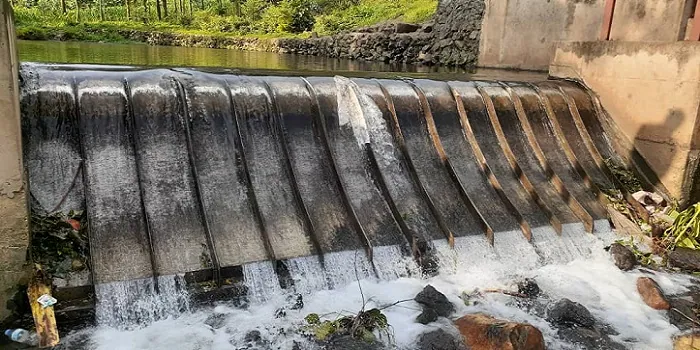
ADENCO answered with a custom production batch rather than a catalogue unit. The screens were built to non-standard dimensions, made heavier than standard for the extreme conditions on site, and fitted with protection bars against large debris. Material is 304 stainless steel. The complete custom series went from order to dispatch in 5 weeks.
The screen has a rated capacity of 850 l/s. That figure is the capacity of the screen itself, not the flow of the hydropower plant: Kigasa is designed for a flow of 0.4 m³/s (400 l/s), and the screen was deliberately selected with spare capacity above the plant’s requirement. Installation was assisted by a major French construction company.
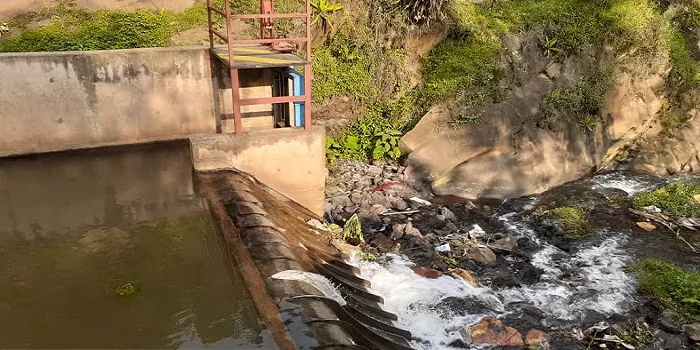
Using a Coanda screen also simplified the concrete works. The hydropower plant needs no separate sedimentation basin: a forebay tank is located directly below the screen and water travels from intake to turbine in a buried, pressurised pipe, which keeps the full 80 m gross hydraulic head available to the turbine (intake at 1,764 m above sea level, powerhouse at 1,684 m). A conventional intake would have required an open channel to a sedimentation basin upstream of the penstock. The 400 kW plant operates a vertical-axis Pelton turbine with four injectors and feeds the national grid.
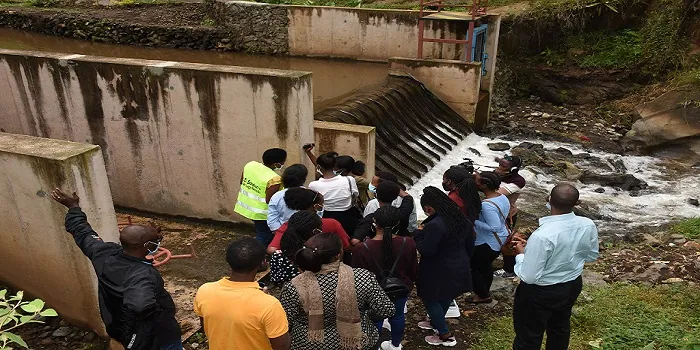
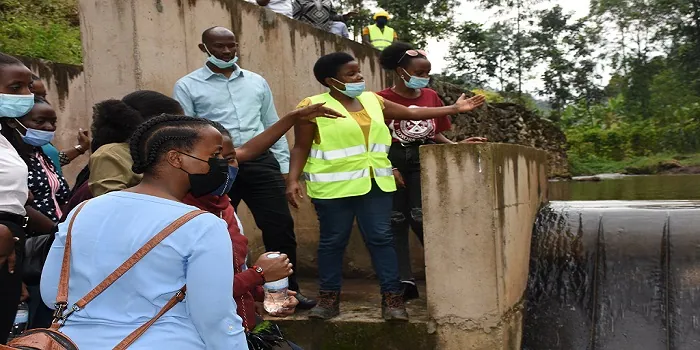
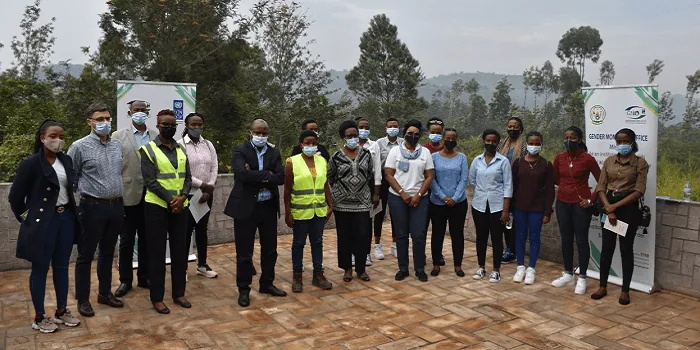
The hydropower plant has been documented by third parties independently of ADENCO. Rwanda’s Gender Monitoring Office visited Kigasa in June 2021 with UNDP, UN Women and the Private Sector Federation for a STEM (science, technology, engineering and mathematics) study tour. Three of the photographs below were taken during that visit. Those reports describe the plant and its role, not the intake equipment. A separate 2019 field study report describes the Coanda intake itself in technical detail.
Results
Gallery
Delivered with ISO 9001 documentation, EN 10204 3.1 material certificates, and factory and site acceptance test (FAT/SAT) procedures.