- Application
- Drinking Water
- Country
- Türkiye
- Project type
- New construction
- Design flow
- 105 l/s and 150 l/s
- Model
- 3 x ADENCO-45-1 and 3 x ADENCO-70-0.75
- Number of screens
- 6
- Material
- 304 stainless steel, with protection bars
- Client
- TISKI (Trabzon Water and Sewerage Administration)
Overview
The first question a water utility in the Eastern Black Sea highlands asks about any intake screen is what it does in winter. River intakes here are located high in the valleys, the pond behind the weir freezes over for weeks, and a screen that freezes shut cuts off a village’s water supply until someone can reach it. This page covers two separate intake structures at two different sites in the Trabzon water supply network, each on its own river, photographed in the middle of that season.
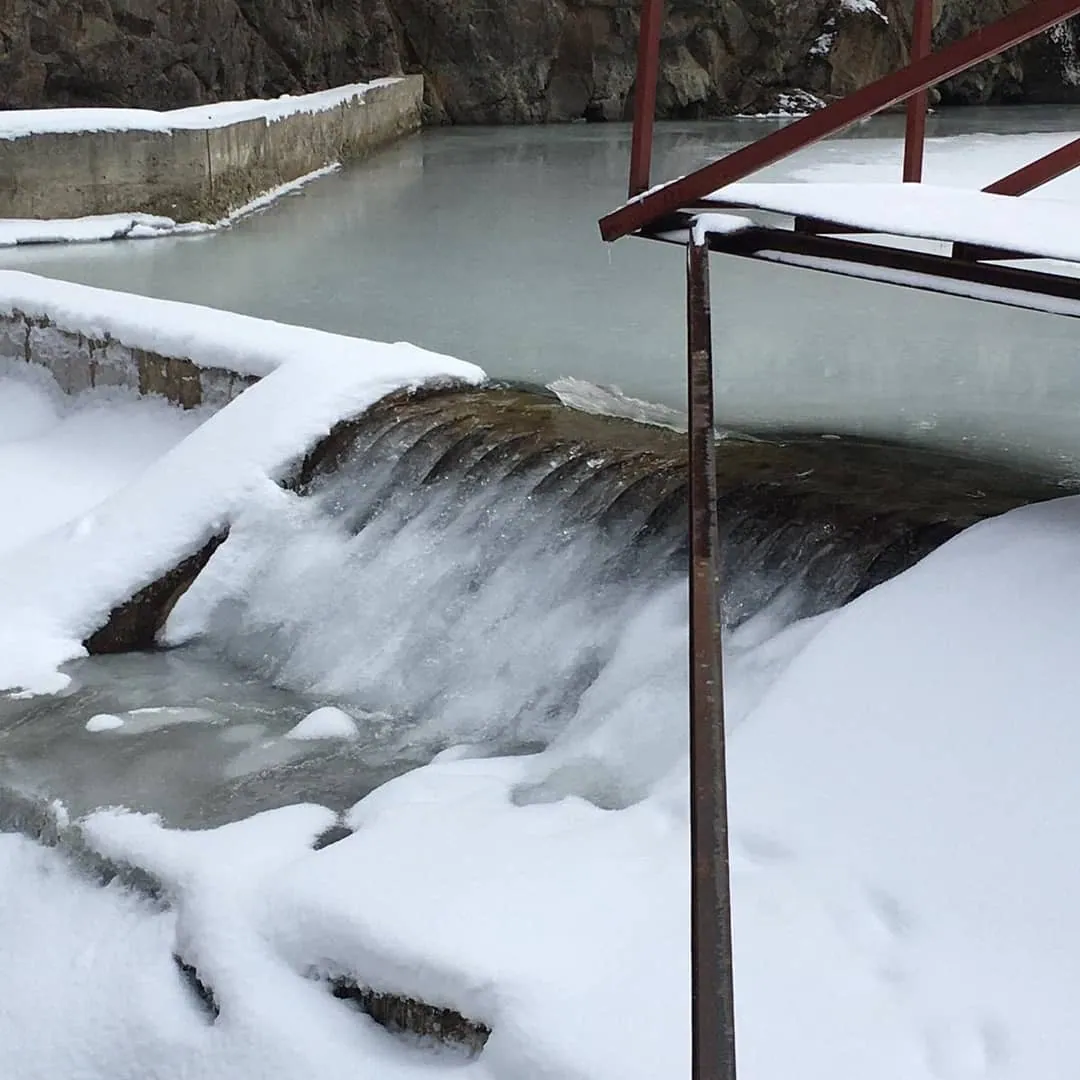
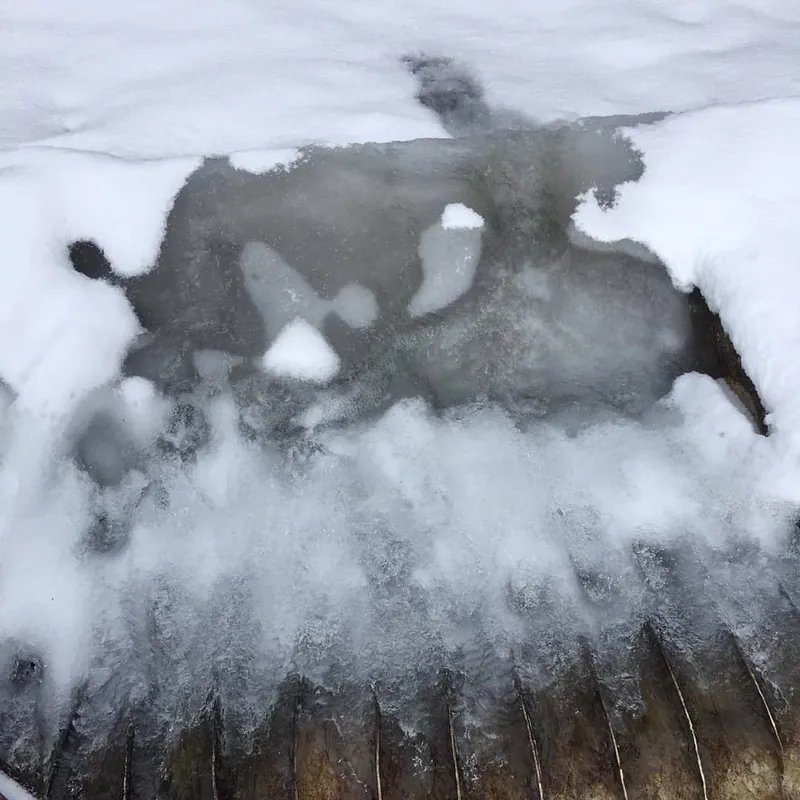
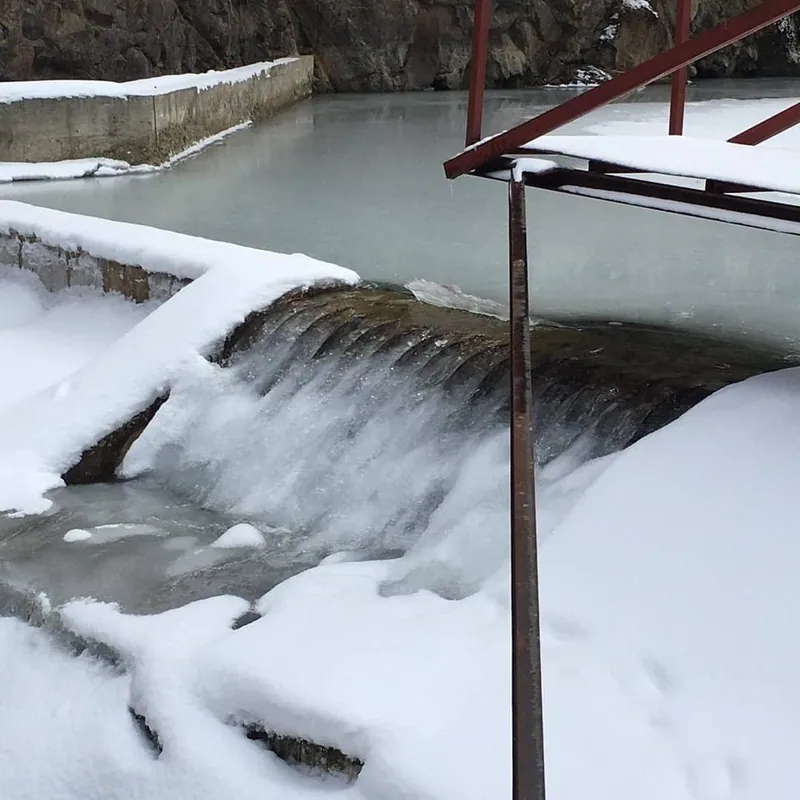
The first intake takes 105 l/s through three ADENCO-45-1 screens behind protection bars. In the photographs the river arrives between frozen river banks, the screen face lies under a crust of ice and snow with the wedge wire showing at the lower edge, and the water passes beneath that crust and on into the supply channel.
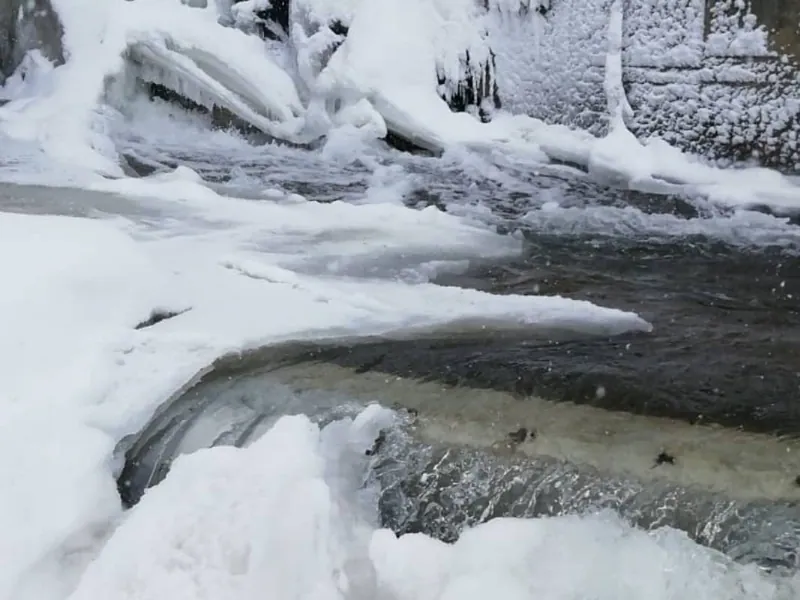
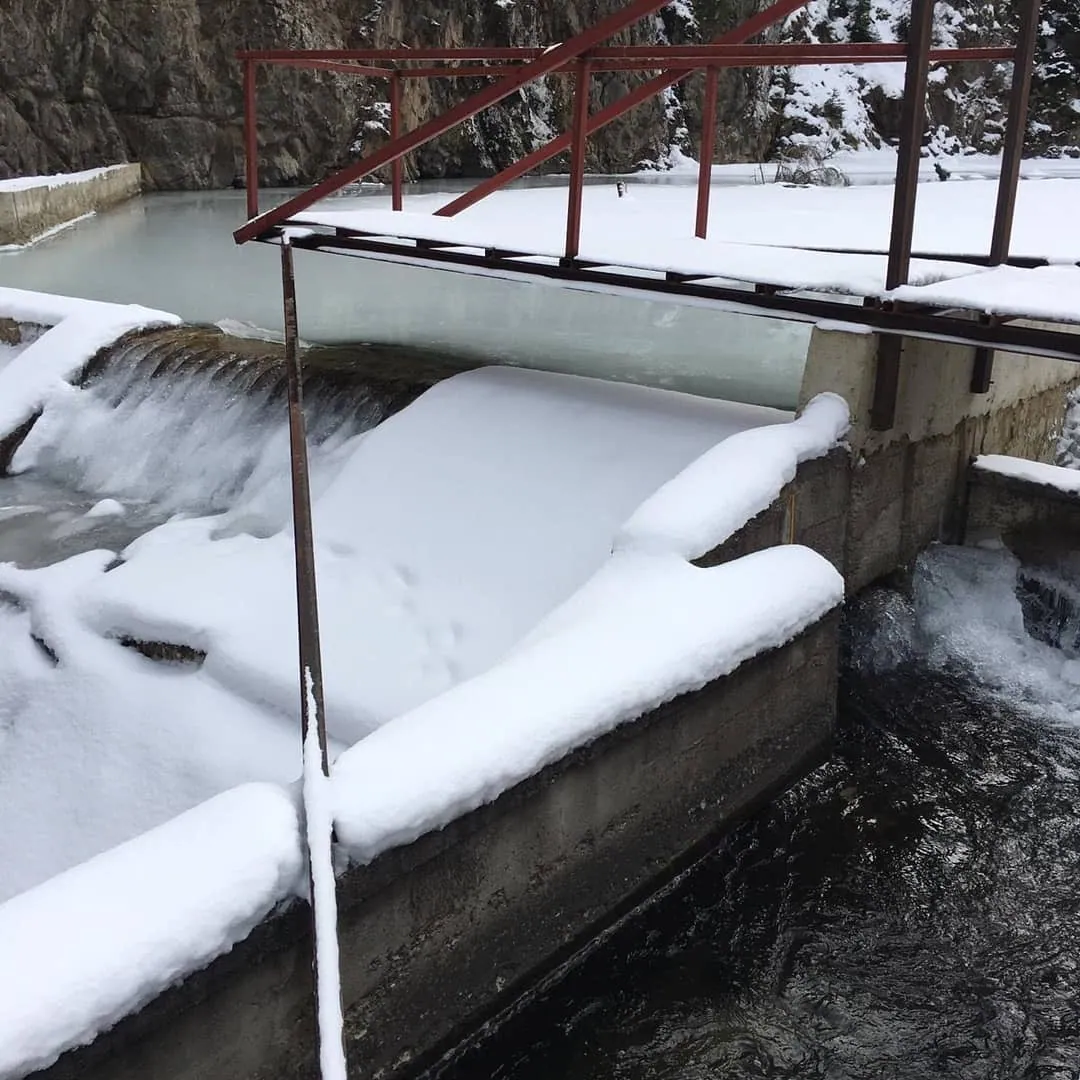
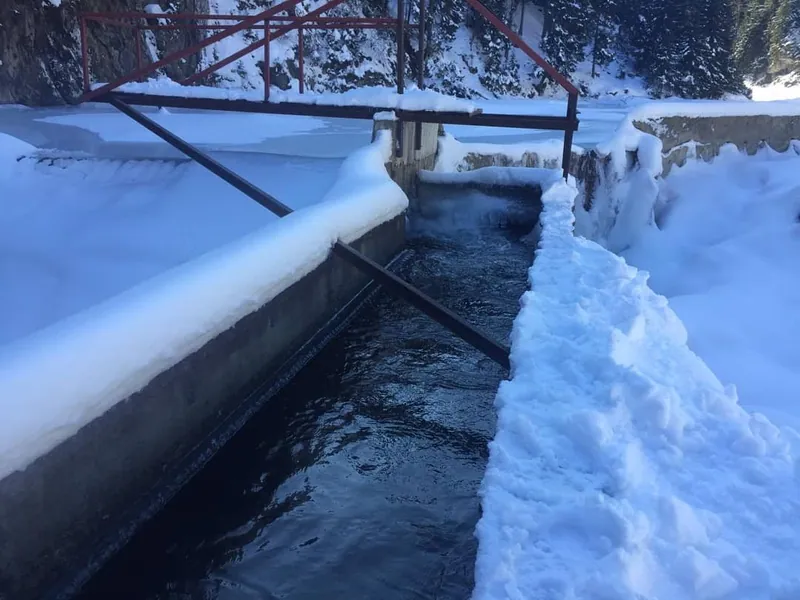
The second takes 150 l/s through three ADENCO-70-0.75 screens, again with protection bars. In January 2020 the pond behind the weir was a solid sheet of ice and snow lay along the walls, while a sheet of water crossed the screen face into the channel; on a later visit with deeper snow the channel was flowing full and dark under the drifts. On both intakes the screen continued to take water at every winter visit, with no flushing gate to open and no one sent up the valley to free it of ice.
The reason is where the screen takes its water from. A Coanda screen feeds on the moving sheet of water that comes over the weir crest, not on the calm upstream pond, so ice on the pond surface does not reach it. Water moving across the screen surface does not freeze while it keeps moving, and when ice does bridge over the wedge wire in the coldest nights, the flow continues underneath and reopens the screen surface as the temperature climbs. The same behaviour has been measured on Coanda intakes in Norway through four winters.
The first two photographs in the gallery are of the 105 l/s intake. The three that follow are of the 150 l/s intake, a different structure at a different site: first in January 2020, then on the later visit with deeper snow.
Results
Gallery
Delivered with ISO 9001 documentation, EN 10204 3.1 material certificates, and factory and site acceptance test (FAT/SAT) procedures.