In This Guide
How a Coanda Intake Screen Works
The Coanda effect (first identified by Romanian engineer Henri Coanda in 1910) explains why a fluid jet follows a nearby curved surface rather than travelling in a straight line. This is the operating mechanism of every ADENCO intake screen.
Weir overflow
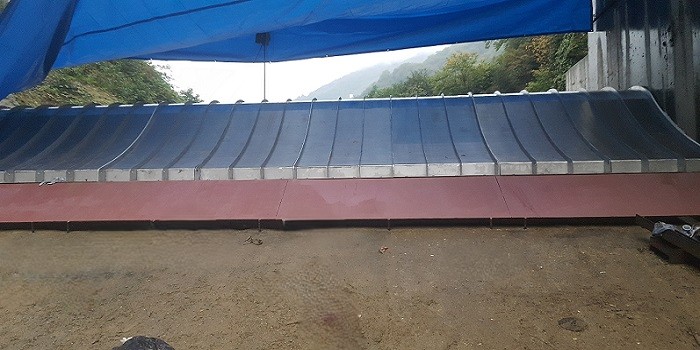
Water from the river or canal rises above the weir crest and flows over a precisely shaped acceleration plate with an ogee-shaped (S-curved) profile. The curve is calculated for each project's specific weir height, crest geometry, and design flow.
Acceleration
As the thin sheet of water flows down the acceleration plate, gravity accelerates it to 2–3 m/s. This velocity is critical: it provides the energy for both filtration and self-cleaning.
Separation
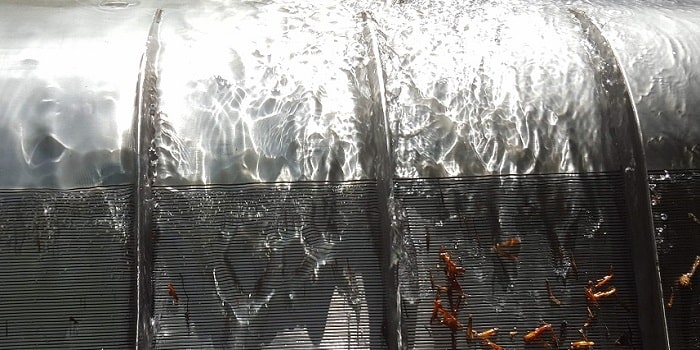
The accelerated sheet of water meets precision-fabricated wedge wire (V-wire) panels with tilted slots. The Coanda effect causes the boundary layer of water to cling to the wire surface and deflect through the slot as clean filtrate. Debris larger than the slot opening is carried across the wire tips by its own momentum.
Collection
Clean water that passes through the screen collects in the collection chamber below and flows by gravity to the downstream system: penstock, pipeline, treatment plant, or pump house.
Debris discharge
All rejected material (leaves, branches, sediment, algae, plastic, aquatic organisms) slides off the curved screen face and is discharged over the lower edge of the screen back into the watercourse. The screen cleans itself every second it operates.
The entire process is powered by gravity. No pump, no motor, no electrical connection. The screen operates whenever water flows over the weir and stops when the water stops.
What Is a Coanda Intake Screen?: Full technical explanation of Coanda effect physics, screen components, and Wahl 2021 research findings
Key Design Parameters
Every ADENCO Coanda screen is designed for its site. The following parameters are calculated for each project's specific site conditions, not taken as standard values from a catalogue. Manufacturing tolerance is ±0.1 mm on slot width and ±0.25° on tilt angle.
Slot Width: 0.5 to 2.0 mm (1.0 mm standard); narrower slots on request
The slot width determines what passes through the screen and what is excluded.
| Slot Width | Typical Application | Material Retained |
|---|---|---|
| 0.5 mm | Pelton turbine protection, drip irrigation pre-filtration, maximum fish protection | All debris, coarse sediment, all fish life stages |
| 0.75 mm | Francis turbine protection, fine-slot municipal pre-filtration | Leaves, twigs, organic debris, sand, juvenile fish |
| 1.0 mm | Standard hydropower, municipal intake, eel regulation compliance | All coarse debris, medium sediment, protected fish species |
| 1.5 mm | General debris exclusion, flood irrigation, snowmaking | Leaves, branches, coarse organic material |
| 2.0 mm | Maximum flow capacity, coarse pre-screening | Large debris, branches, gravel |
Wire Tilt Angle: 3°–7°
Each wedge wire is tilted downstream at a precise angle. This tilt creates the geometry that makes both filtration and self-cleaning possible.
| Tilt Angle | Effect |
|---|---|
| 3° | Filtration of smaller particles, better debris exclusion. Reduced capacity (−10–15% compared with the standard 5° tilt). Best for maximum water quality. |
| 5° | Standard: the optimal balance between filtration efficiency and flow capacity. Used in the majority of installed screens. |
| 6° | High capacity (+8–12% compared with the standard 5° tilt). Slightly coarser effective filtration. Best for high-flow with moderate debris. |
| 7° | Upper limit of the range and the highest capacity. Above 7° the flow separates from the wires and the Coanda effect is lost, according to the US Bureau of Reclamation (USBR) Coanda Design Guide (Wahl, 2003, report R-2003-03). Chosen for high-flow applications with light debris. |
Screen Inclination
Typically set between 25° and 60°. Steeper angles (45°–60°) improve debris removal; shallower angles (25°–35°) take in more water per unit area.
Curvature Radius
Set between 3.0 and 3.7 m to optimise the interaction between the accelerated sheet of water and the wire geometry across the full screen length.
Flow Capacity
Approximately 140 l/s per metre of weir width on the USBR reference geometry under standard conditions (1.0 mm slot, 5° tilt, adequate hydraulic head). ADENCO’s own series are rated at 35, 67 and 150 l/s per metre for the ADENCO-45, ADENCO-70 and ADENCO-127.
Sizing Reference
Required weir width (m) = Peak design flow (l/s) ÷ 140, using the USBR reference-geometry value for a first-pass estimate. Size the final configuration using the chosen model’s rated capacity: 35, 67 and 150 l/s per metre for the ADENCO-45, ADENCO-70 and ADENCO-127.
| Design Flow | Approximate Weir Width |
|---|---|
| 50 l/s | 0.36 m |
| 100 l/s | 0.71 m |
| 200 l/s | 1.43 m |
| 500 l/s | 3.57 m |
| 1,000 l/s | 7.14 m |
Engineer's Guide to Coanda Screen Design: slot width selection, dual flow mechanism, design practices, and the balance between wire tilt, capacity and filtration
Material Options
If the material grade does not match the water chemistry, pitting corrosion will widen slots and destroy hydraulic performance, and the screen will no longer meet fish protection requirements. ADENCO manufactures screens in six stainless steel grades:
| Grade | Molybdenum | Chloride Tolerance | Recommended For |
|---|---|---|---|
| 304 | None | <200 ppm | Clean freshwater: mountain streams, reservoirs |
| 304L | None | <200 ppm | Same as 304, with better corrosion resistance at the welds |
| 316 | 2–3% | 200–1,000 ppm | Brackish water, coastal rivers, estuarine sites |
| 316L | 2–3% | 200–1,000 ppm | Standard choice for welded screens in brackish water |
| Duplex 2205 | 3–4% | >1,000 ppm | Sites near seawater and high-chloride industrial water |
| Super Duplex 2507 | 3–5% | >1,000 ppm | High-chloride coastal, geothermal and seawater-influenced operating environments |
Selection rule:304/304L for clean freshwater. 316/316L for any water with chloride above 200 ppm. Duplex above 1,000 ppm. When in doubt, send us a laboratory analysis of your water: the cost of a material upgrade is a fraction of the cost of premature replacement.
Comparison of 304 and 316 Stainless Steel for Water Intake Screens: Full six-grade comparison with PREN values, Critical Pitting Temperature data, and water-chemistry decision tree
Four Models for Every Flow Rate
ADENCO-45
Water from natural springs, rural drinking water intakes, irrigation. Ideal for remote locations with limited infrastructure.
ADENCO-70
Medium-scale hydropower, municipal water supply, irrigation canal intakes. The most widely installed model in our product line. ADENCO-45 and ADENCO-70 screens are also available as the ADENCO-BOX (Pre-assembled Series), the fourth model: a complete, ready-to-install unit.
ADENCO-127
Large hydropower plants, major irrigation infrastructure, industrial wastewater treatment plants.
Applications by Industry
Hydropower
Slots of 0.5–1.0 mm exclude virtually all debris that can damage turbine components. Capacity is about 140 l/s per metre of weir width on the USBR reference geometry and 150 l/s per metre on the ADENCO-127, with no electricity consumption. Foreign object damage to turbine runners costs the global hydropower sector billions annually.
Gongele HPP (hydropower plant), Antalya: 4,424 l/s across 28 screens, zero unplanned cleaning in the commissioning year
Municipal Water Supply
Conventional mechanical screening (mechanically raked trash racks, travelling band screens, rotating drum screens) can be replaced with a single static structure that delivers pre-filtration at slot widths of 0.5 to 2.0 mm (1.0 mm standard), with narrower slots on request. Maintenance labour hours fall sharply, and no spare parts inventory is needed.
64 Coanda screens supplied for the TISKI (Trabzon Water and Sewerage Administration) municipal project
Snowmaking
No electricity needed at remote mountain intakes. Fine-slot screening in a single stage (0.5 mm slots). Self-cleaning during peak debris loads. Integrated anti-icing systems for screens operating in extreme cold, which is exactly when snowmaking demand is at its highest.
Proprietary anti-icing for alpine operation below freezing
Agricultural Irrigation
Filtration at the intake removes debris before it reaches pumps, pipelines, and emitters. Box screen configurations for portable, seasonal deployment. The global irrigation water filter market reached ~$1.05 billion in 2025, growing at 8.2% annually.
USBR: irrigation time cut from 5 days to 2 days with Coanda screens
Wastewater Pre-Treatment
Solid-liquid separation powered by gravity in food processing, stormwater, and industrial wastewater applications. 30–60% TSS (Total Suspended Solids) removal with no energy use, no moving parts, and no chemicals.
30–60% TSS removal with no energy input
Fish Protection and Environmental Compliance
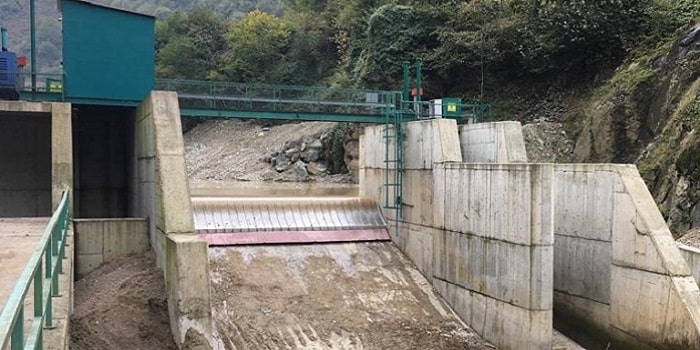
Most intake technologies draw water by suction and protect fish only by reducing the harm that this suction causes. ADENCO Coanda screens remove the cause of harm entirely: there is no suction.
Zero Impingement Risk
A Coanda screen is a gravity-fed overflow device. There is no pump, no suction, and no intake velocity pulling fish toward the screen. In the river or reservoir itself, the approach velocity is effectively zero.
Zero Entrainment Risk
With slot widths as narrow as 0.5 mm, ADENCO screens physically exclude even the smallest larval fish from passing through the screen. Entrainment is physically prevented.
Regulatory Compliance
| Regulation | Key Requirement | ADENCO Compliance |
|---|---|---|
| U.S. Clean Water Act §316(b) | ≤0.15 m/s approach velocity; ≤24% impingement mortality | Zero approach velocity; no mechanism that can cause impingement |
| EU Water Framework Directive | Good ecological status; species-dependent slot/velocity | Slot widths matched to species; no suction |
| UK Eels Regulations 2009 | 1–3 mm slot; criminal offence for non-compliance | Slots manufactured down to 0.5 mm; slot width matched to the site |
| Australia Murray-Darling | ≤0.1 m/s approach; 2–3 mm slot | Zero approach velocity; slots to specification |
2025 Murray cod study:A screen with 0.1 m/s approach velocity and 2 mm slots achieved a 94% reduction in entrainment: larvae were 63 times less likely to be entrained. ADENCO screens go further: they eliminate approach velocity entirely.
Fish-Friendly Water Intake Screens: Section 316(b) and EU Compliance: Full regulatory framework, species-specific guidance, and Murray cod 2025 study
Anti-Icing Technology for Cold Climates
Frazil ice consists of microscopic ice crystals that form in supercooled water, only 0.01–0.1°C below 0°C. It can block a water intake screen in minutes. Research at the NTNU frost laboratory in Norway identified two distinct ice clogging mechanisms:
Type I: Soft Ice
Accumulation on wire surfaces from ice particles in approaching water. Screen remains partially functional; it becomes free of ice again when temperatures rise.
Type II: Solid Ice
Solid ice forms between the wires when the screen itself cools below 0°C in extreme cold (observed at −13.8°C to −14.0°C). Blockage is rapid and complete.
ADENCO Anti-Icing Systems
Electric heating elements
Low-wattage elements maintain wire surfaces above 0°C. Typical consumption: 100–500 W/m².
Warm water recirculation
A small pump returns above-freezing water from the collection chamber to the screen face.
Heated compressed air diffuser
Warm air bubbles create mixing zones that push frazil ice crystals away from the screen.
Insulated enclosures
Enclosures shield the screen from wind and convective heat loss. They are effective down to approximately −10°C.
ADENCO proprietary system
Proprietary system designed specifically for Coanda screen geometry in extreme alpine environments.
Design principle:Taking the cold climate into account at the design stage adds 15–30% to screen cost. Taking it into account only after the first winter shutdown typically costs 3–5 times that amount, plus lost revenue during downtime.
Anti-Icing Technology for Water Intake Screens: NTNU frost lab research, Type I vs. Type II mechanisms, five anti-icing methods compared, and cold-climate design checklist
Coanda vs. Alternative Technologies
| Parameter | Bar Screen | Trash Rack (mechanically raked) | Drum Screen | Travelling Band | Passive Wedge-Wire Screen | ADENCO Coanda |
|---|---|---|---|---|---|---|
| Opening size | 25–150 mm | 6–25 mm | 0.5–3 mm | 3–10 mm | 0.5–3 mm | 0.5–2.0 mm (1.0 mm standard); narrower on request |
| Electrical power required | None | 1–5 kW | 2–8 kW | 3–10 kW | None | None |
| Moving parts | None | Motor + rake | Motor + drum | Motor + chain | None | None |
| Self-cleaning | No | Mechanical | Mechanical | Mechanical | Partial | Yes, passive |
| Routine maintenance | Daily–weekly | Daily inspection | Monthly service | Monthly service | Weekly–monthly | Annual inspection |
| Operating cost/year | Low | Medium | Medium to high | High | Low | Very low |
| Fish protection | None | Partial | Good | Good | Good | Excellent |
| Design life | 20–30 yr | 10–15 yr | 10–15 yr | 10–15 yr | 20–25 yr | no wearing parts |
No other passive technology achieves filtration below 2 mm with continuous self-cleaning, no energy use, and inherent fish protection.
Coanda Screen vs. Bar Screen vs. Drum Screen: Complete Comparison: Six technologies across twelve parameters with application-by-application selection guide
Maintenance: What 10+ Years of Operating Data Shows
"Self-cleaning" does not mean "zero maintenance." The shear flow across the tilted wedge wire continuously sweeps all surface debris: this mechanism does not degrade over time. However, three slow processes require periodic attention:
Mineral scale
In hard water (>200 mg/L CaCO₃), calcium, iron and manganese mineral scale gradually narrows the effective slot width. A 1.0 mm slot with 0.2 mm of mineral scale on each wire face becomes 0.6 mm: about 40% capacity reduction over 3–5 years.
Biological fouling
In warm, nutrient-rich water, biofilm can form on wire surfaces during extended low-flow periods. Biofilm traps fine sediment, creating composite deposits.
Macro-organism colonisation
At some sites, freshwater mussels or barnacles (brackish water) colonise support rods and frame components over extended periods.
Recommended Maintenance Schedule
| Interval | Action |
|---|---|
| Annual | Visual inspection of screen surface, slot condition, support structure, and collection chamber. |
| Every 2–3 years | Pressure wash (100–150 bar) to remove mineral scale and biofilm. At clean freshwater sites, the interval can be extended to 5 years. |
| Every 5–10 years | Detailed inspection of wire cross-section for wear or corrosion. Assess capacity degradation. |
| As needed | Mild acid wash (dilute citric acid or phosphoric acid) for heavy mineral scale in hard water. |
Annual Maintenance Cost Comparison
| Technology | Relative Annual Cost | Primary Activity |
|---|---|---|
| ADENCO Coanda screen | € | Annual inspection + periodic pressure wash |
| Passive wedge-wire screen (submerged) | € | Diver inspection, manual cleaning |
| Trash rack (mechanically raked) | €€ | Daily inspection, lubrication, part replacement |
| Travelling band screen | €€€ | Monthly overhaul, chain/sprocket replacement |
Coanda Screen Maintenance: 10+ Years of Operating Data: Mineral scale mechanisms, pressure-wash procedures, acid-wash protocols, and 25-year cost modelling
Pricing and Total Cost of Ownership
ADENCO provides project-specific pricing because every screen is designed for its site. The variables that determine cost (screen width, material grade, slot width, anti-icing equipment, array configuration) vary substantially between projects.
Indicative Price Ranges
| Category | Typical Range | Example |
|---|---|---|
| Panels for self-built micro-hydro plants | $200–600 | Pre-built, fixed-size, 304 stainless steel, standard slot, no engineering; market price per panel |
| Custom single-panel screen | €1,500–5,000 | Designed for the site, selected material, hydraulic analysis |
| Multi-panel professional system | n × €1,500–5,000 | Multi-panel array with acceleration plate and collection chamber; n = number of units, total quoted per project |
| Large-scale project | n × €1,500–5,000 | Municipal or industrial systems with dozens of units; total quoted per project |
25-Year Total Cost of Ownership
The purchase price is typically higher than that of a conventional mechanical screen. The comparison changes when the total cost of ownership over a 25-year service life is considered:
| Cost Component | Conventional Mechanical | ADENCO Coanda |
|---|---|---|
| Capital cost | $5,000–30,000 | $10,000–50,000 |
| Annual electricity | $1,000–5,000 | $0 |
| Annual maintenance | $10,000–85,000 | $200–500 |
| Overhaul (every 5 yr) | $5,000–15,000 | $0 |
| Replacement (yr 12–15) | $5,000–30,000 | Not required |
| 25-year operating cost | $250,000–2,000,000+ | $5,000–12,500 |
Typical payback period when an ADENCO Coanda screen replaces a conventional screen: 1–3 years (depends on the current maintenance cost)
How Much Does a Coanda Screen Cost? Full price analysis by ten cost factors and 25-year total cost of ownership (TCO) model
Custom vs. Pre-Built
Pre-built, fixed-size Coanda screens sold off the shelf for the self-built micro-hydro market (fixed 1.5 mm slots, 304 stainless steel, standard dimensions) are adequate for those small systems. For every other application, the screen must be designed for the specific site. You need custom engineering when any of the following are true:
ADENCO's 6-Step Design Process
Site data collection
Flow rate, available head, water chemistry, debris type, environmental requirements, site constraints.
Hydraulic analysis
Screen dimensions, slot width, wire tilt, acceleration plate geometry calculated for the specific site.
Material selection
Grade matched to water chemistry using chloride concentration, pH, temperature, and PREN analysis.
Anti-icing assessment
Climate data reviewed; anti-icing measures included if required.
Engineering documentation
Full hydraulic calculations, material certificates, dimensional drawings, compliance data.
Manufacturing & delivery
Precision fabrication in stainless steel with ±0.1 mm slot tolerance.
Custom vs. Pre-Built Coanda Screens: Decision framework, common specification mistakes, RFQ checklist, and when a pre-built screen is enough
Retrofitting Existing Intakes with Coanda Screens
Most existing water intake structures can accept a Coanda screen without structural modification. Our engineering team designs each screen to match the dimensions and hydraulic characteristics of your existing channel, weir, or intake chamber. The retrofit process typically takes 8 to 14 weeks from initial assessment to installed, operational screen.
Once the Coanda screen is installed, the old mechanical system can be fully removed. The motors, drive units, control panels, and electrical connections that served the old screen are no longer needed. This simplifies the facility and eliminates an entire maintenance category from the operations budget.
Climate Resilience
ADENCO Coanda screens are designed to keep working through the climate extremes an intake sees:
Drought / low flow
Operates at any flow above the minimum. There is no pump that can run dry and no motor that can overheat. Output falls smoothly as the flow decreases.
Flood / extreme debris
The self-cleaning mechanism copes with debris surges without manual intervention. The screen surface is free of debris again within minutes of the flood receding.
Extreme cold / frazil ice
Anti-icing equipment prevents blockage. Operating data from Norwegian sites confirms that screens clear themselves again after ice events without operator intervention.
Power outage
The screen uses no electricity, so a power outage has no effect on it. It operates in exactly the same way with or without grid power.
Sustainability
ADENCO Coanda screens achieve what no conventional fine-screening technology can match:
Zero Energy
0 kWhNo electrical connection required for screening operation; optional anti-icing equipment is the only powered accessory. Conventional screens consume 8,700–70,000 kWh per year.
Zero Moving Parts
0 componentsNo motors, chains, sprockets, bearings, or lubricants. Design life determined by chemical corrosion resistance, not mechanical degradation.
Zero Chemicals
0 chemicalsNo coagulants, biocides, or cleaning agents. Separation is purely physical: slot geometry and fluid dynamics.
Aligned with LEED, BREEAM and the UN Sustainable Development Goals: SDG 6 (Clean Water and Sanitation), 7 (Affordable and Clean Energy), 9 (Industry, Innovation and Infrastructure).
Engineering Resources
Sizing Tool
Input your project parameters and get a preliminary screen recommendation in seconds.
ROI Calculator
Compare the total cost of ownership between Coanda and your existing mechanical system.
Technical Specifications
Detailed specifications for all four models, design parameters, and material options.
Knowledge Base
Engineering answers on Coanda technology, filtration performance, applications, and comparisons.
FAQ
Answers to common questions about products, engineering, installation, ordering, and delivery.
Downloads
Project datasheets, drawings, and CAD files issued with every quotation.
Frequently Asked Questions
How much water can a Coanda screen deliver?
Approximately 140 litres per second per metre of weir width on the USBR reference geometry under standard conditions (1.0 mm slot, 5° tilt, adequate hydraulic head), so a 2-metre-wide screen delivers ~280 l/s. That is the published industry reference value; ADENCO’s own series are rated at 35, 67 and 150 l/s per metre for the ADENCO-45, ADENCO-70 and ADENCO-127. For higher flows, ADENCO designs multi-panel arrays. Our largest single order supplied 64 screens across the intake network of a single water utility, and the largest single site operates 28 screens at one hydropower plant in Antalya.
Do Coanda screens really clean themselves?
Yes, the screen cleans itself of surface debris. The high-velocity shear flow across the tilted wedge wire continuously sweeps leaves, branches, algae, sediment, and organic material off the screen face. Mineral scale and biological fouling require periodic pressure washing (typically every 2–5 years); routine attention is one manual clean per season and an annual inspection.
What is the minimum head required?
About 450 mm, the drop height of the smallest ADENCO screen. According to the USBR Coanda Design Guide (Wahl, 2003, report R-2003-03), the flow must accelerate over the screen drop before it passes the wire slots, so drops below 450 mm reduce performance. 600–1,000 mm of available head is typical for standard applications; sites with less head should be reviewed by our engineers.
Is there a minimum screen width?
We do not recommend single screens narrower than 150 mm, because flow over the screen face becomes uneven below that width. The smallest standard unit, ADENCO-45-0.15 (150 mm, ~5 l/s), has proven itself in operation; for debris-heavy water we advise choosing the next larger width.
Can Coanda screens operate in freezing conditions?
Yes, they can operate in freezing conditions with appropriate anti-icing equipment. ADENCO offers five anti-icing methods: electric heating, warm water recirculation, heated air diffusers, insulated enclosures, and our proprietary anti-icing system.
Are Coanda screens fish-friendly?
Yes, they are fish-friendly by design. Because the screen operates by gravity overflow with no suction, there is zero approach velocity from the waterbody. Combined with slot widths as narrow as 0.5 mm, ADENCO screens can be supplied to meet the fish protection criteria of U.S. Section 316(b), the EU Water Framework Directive, the UK Eels Regulations, and Australian Murray-Darling guidelines.
How long does a Coanda screen last?
The screen is a welded stainless steel structure with no mechanical components to wear, so service life is determined by corrosion resistance rather than by mechanical failure. That is why material selection matched to your water chemistry is the decisive factor.
What does a Coanda screen cost?
A single ADENCO screen unit costs €1,500 to €5,000 ex works, depending on slot width, material grade, screen dimensions and the number of units. The total for a complete intake depends on the number of units, the concrete works and the protection bars; we quote it per project. With no electricity consumption and no mechanical servicing, the 25-year cost of ownership is a fraction of conventional mechanical screening; the payback depends on what the screen replaces and is worked out with your figures at engineer review.
How do I get a quote from ADENCO?
Contact our engineering team with your site data: design flow rate, available head, water chemistry, and application type. ADENCO provides a detailed engineering proposal within 1–2 business days.
Start Your Project
Every ADENCO Coanda screen begins with your site data and ends with a precisely designed screen that will operate for its full design life. Provide your design flow rate, available head, water chemistry, and application type.
ADENCO's engineering team will respond with a project-specific technical proposal within 1–2 business days. Include your design flow rate, available head, water chemistry, and application type for the fastest response. 500+ projects delivered since 2013. ISO 9001 & ISO 10002 certified.